All Amarillo Public Library branches will be closed on Monday, January 19, in observance of Martin Luther King Jr Day.

History

Over a Century of Turning Pages

Amarillo Public Library’s roots trace back to 1900, when twelve young women in the Just Us Girls Club decided their city needed a public library and set out to build one themselves. What started with 90 donated books and a rented room above a bank has grown, through more than a century of moves, name changes, and community support, into the library system Amarillo relies on today. Explore the milestones, buildings, and people who shaped that journey below.

1900
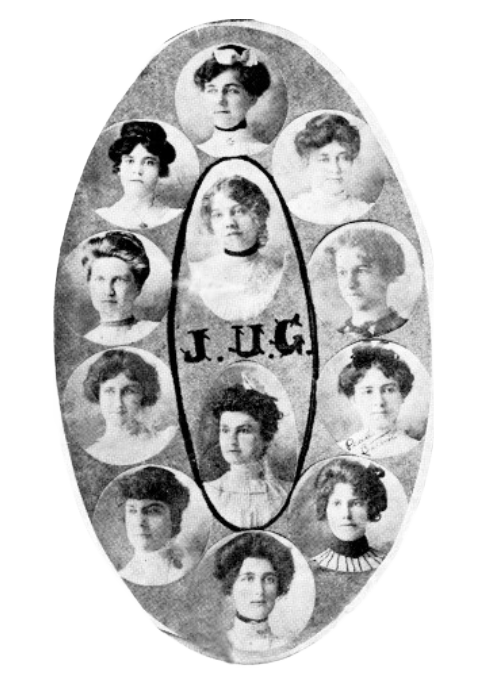
The first members of the JUG Club, c. 1900

The first members of the JUG Club, c. 1900. The charter members were Misses Pearl Bethune, Sue Beverley, Corrie Brower, Maude Crossett, Lave Eakle, Margaret Harrell, Stella Huff, Ollie Hughes, Clara Smith, Mamie Trigg, Floriede Ware, and Kate Williams.

Just Us Girls Club is formed.
1902
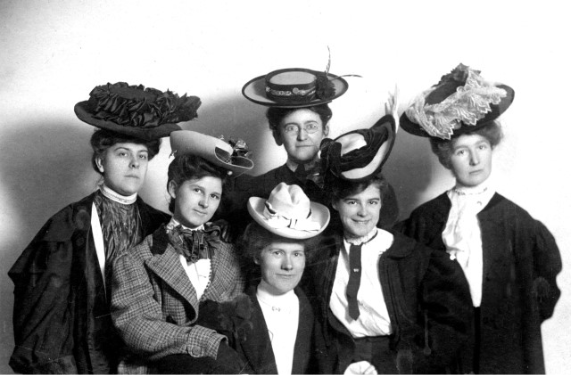
The JUG Club Library Committee members in 1903

The JUG Club Library Committee members in 1903. In the back row are Floriede Ware (Mrs. Sam Vaughn), Iva Nobles (Mrs. Frank Storm), and Trulie Works (Mrs. Bailey). In the front row are Bernice Russell (Mrs. Hayes), Mamie Trigg (Mrs. B. W. Owens), and Corrie Brower (Mrs. Jim Richardson). 

The club members decide to create a library for the public. Local teacher Margaret Wills, a graduate of Vassar, agrees to sponsor the group. She secures 90 books from W.H. Bush of Chicago. Mr. Bush owned the Frying Pan Ranch. Mrs. Wills’ husband, John Hatcher Wills, was one of Potter County’s original pioneers who opened a land office in 1887 and frequently did business with Mr. Bush.
March 21, 1902
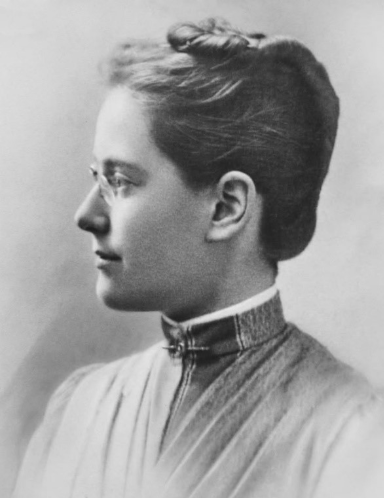
Margaret Summers (1871-1915)

Margaret Summers (1871-1915) came to Amarillo and began teaching in 1891. She married John Hatcher Wills in 1895. A graduate of Vassar and one of Amarillo’s pioneer teachers, she sponsored the JUG Club and challenged its members to create a public library. Mrs. Wills secured the library’s first ninety books from Mr. William Henry Bush, owner of the Frying Pan Ranch. Margaret Wills Elementary is named in her honor.

The JUG Club hosts a party at Margaret Harrel’s home, and members of the community formally present the club with an additional 33 donated books.
August 5, 1902
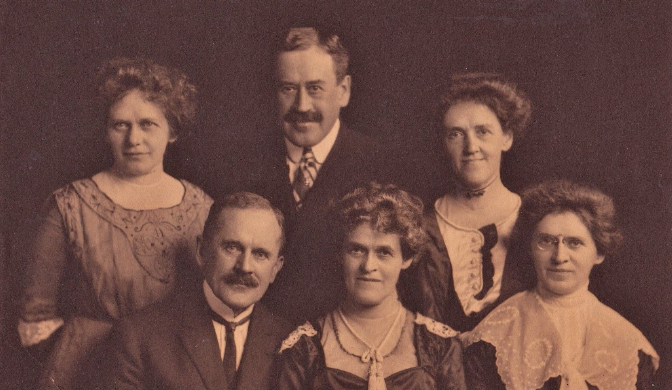
A portrait of the Bush family featuring two men and four women

The Bush brothers and sisters. Mr. William Henry Bush (1849-1931) appears in the middle of the back row. Mr. Bush’s first wife was Elva Glidden, daughter of barbed wire inventor Joseph Glidden. Mr. Bush and Henry Sanborn, the father of Amarillo, were both business partners of Mr. Glidden and went into business together to establish the Frying Pan Ranch. Mr. Bush, for whom Bushland is named, later became a multimillionaire when helium deposits were discovered in natural gas wells on the ranch around 1916.

Mrs. Wills presents the JUG Club with the 90 books sent by Mr. Bush.
September 25, 1902
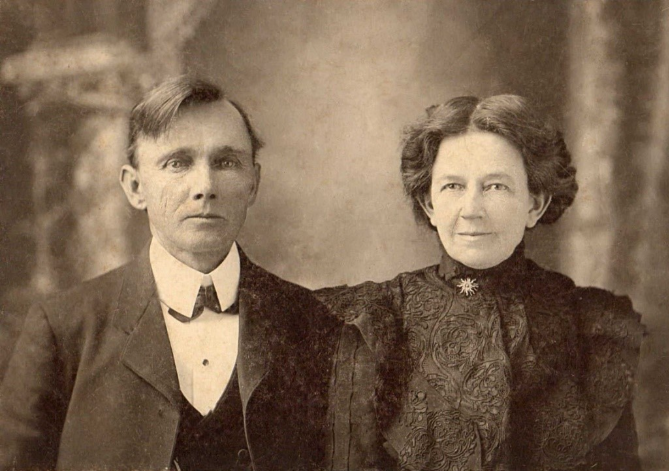
Dr. Eli Atchinson Johnston and his wife Virginia Featherstone Johnston

Dr. Eli Atchinson Johnston (1850-1933) and his wife, Virginia Featherston Johnston. Dr. Johnston was one of Amarillo’s pioneer physicians. He came to Amarillo in 1900 and practiced medicine at St. Anthony’s Sanitarium. He also served as the president of the Panhandle District Medical Society and as Potter County’s Health Officer during his career. Dr. and Mrs. Johnston donated a rented room in the First National Bank that served as the library’s first location.

Dr. and Mrs. Eli Atchison Johnston donate one rented room on the second floor of the First National Bank, located at the northeast corner of 4th and Polk.
October 4, 1902
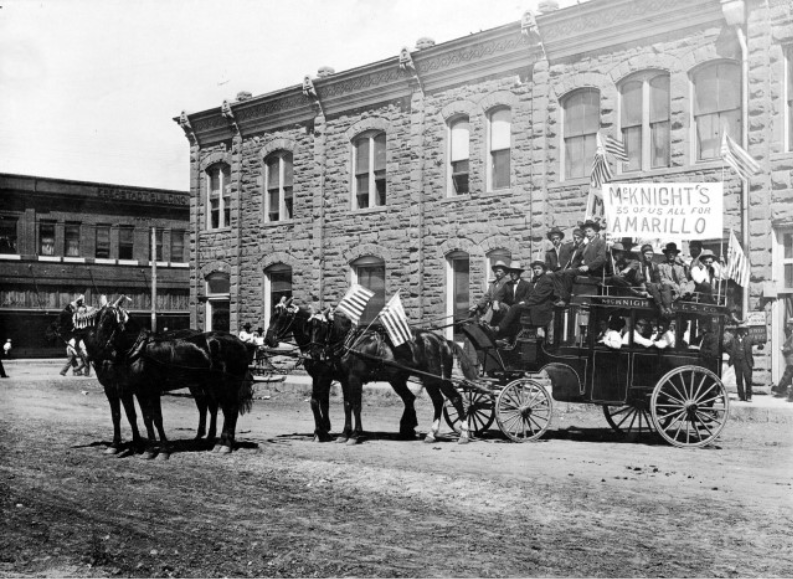
A vintage photo of the First National Bank building, c. 1900

The First National Bank building, c. 1900. The library's first home was in one room on the second floor. The US Post Office was located on the ground level at the rear of the bank until 1907. Letters from JUG Club members indicate that the library was over the Post Office, so we can infer that the library was likely in the back portion of the building near the McKnight’s sign in this photo. 

The JUG Library opens to the public.
April 16, 1903

Mrs. Wills donates a room for the library. It is unclear whether this was an additional or a different rented room at First National Bank, or whether this room was in her home at 403 S. Fillmore.

Summer 1904
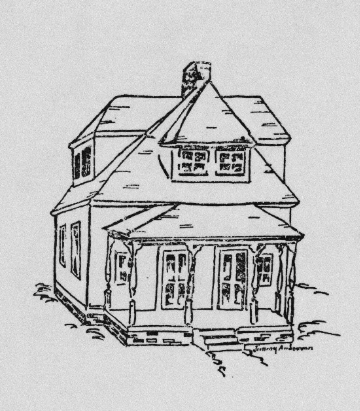
JUG Library building sketch

The JUG Library building, located at 503 Fillmore. No known pictures of this building survived, but the surviving club members commissioned this drawing of the building for the JUG Club's 50th anniversary celebrations.

The JUG Club raises $205 to purchase a two-room wood-frame house from Mr. Ray Wheatley, which Mr. Potter allowed to be moved onto his property on the southeast corner of 5th and Fillmore, east of the Potter County courthouse. Mr. Potter’s boarding house was at 501 S. Fillmore, and the JUG library was given the address 503 S. Fillmore. Mr. Potter’s daughter was a member of the JUG Club.
1907

Residents of the city hold a meeting to discuss the future of the public library as the JUG Club members are finding it difficult to meet demand for library services while tending to their own responsibilities as they grew up, married, and started families.  The JUG Club requests assistance from Amarillo’s Federation of Women’s Clubs to begin moving responsibility for the library to the newly formed Amarillo Public Library Association. The library’s name changes from the JUG Library to the Amarillo Public Library.

March 1907
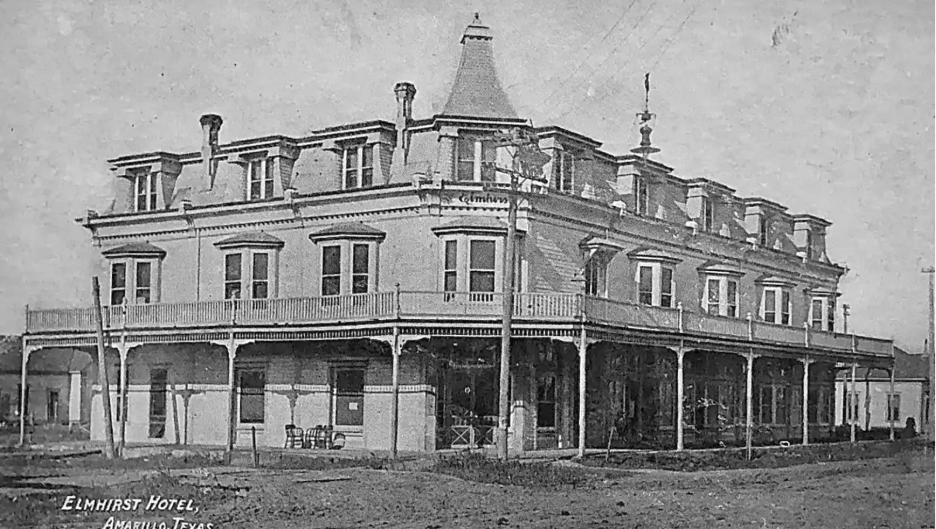
A vintage photo of the Elmhirst Hotel with a small peak at the Amarillo Public Library in the right corner of the image

The Amarillo Public Library can be seen at the right of this photograph of the Elmhirst Hotel. Formerly the Mayor's Office, this building was used as Amarillo's city hall prior to 1907. The library stayed at this location from 1907 to 1909.

The library was given the old Mayor's Office building, a single-story wood-frame house with two rooms, which was then directly east of the Elmhirst Hotel at 5th and Taylor. Newspapers indicate this building was Amarillo's city hall prior to 1907. The city government had moved to the newly built Fire Station at 4th and Tyler, and no one bid to purchase the house and move it off the lot next to the Elmhirst Hotel. Rev. Leonidas Cicero Kirkes (1866-1952) of the Fillmore Street Presbyterian Church, later the Central Presbyterian Church and now the First Presbyterian Church, coordinated the replacement of the building’s partition walls, added new paint, and had electrical services installed for lights at night. The library association was responsible for paying $3 per year in rent as the City did not own the land underneath the building.
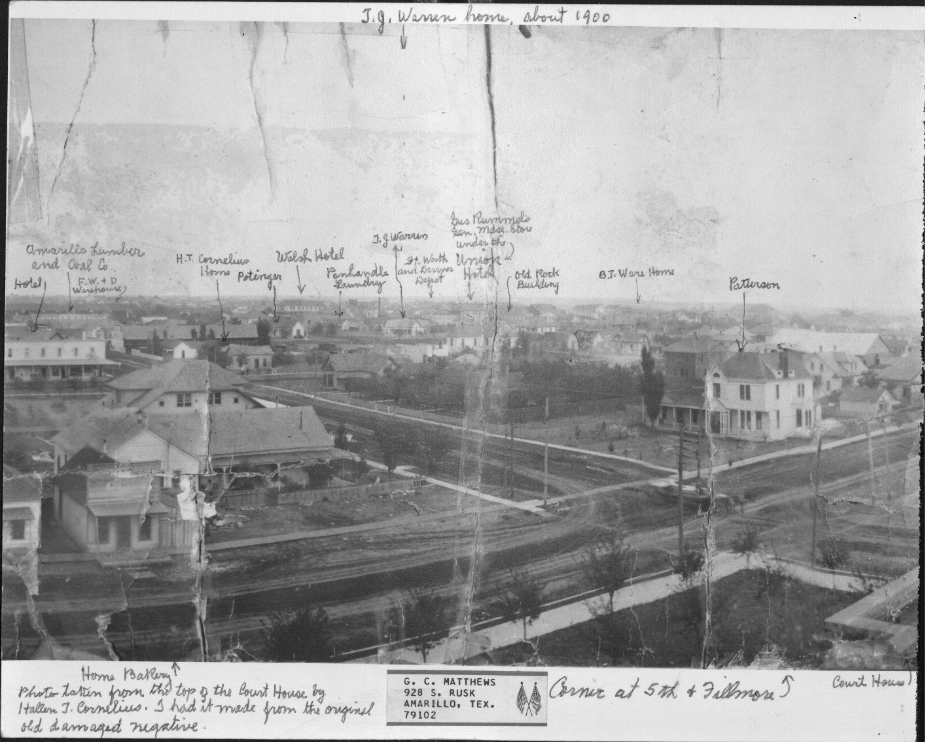
1907
A vintage photograph of Fifth and Fillmore taken from the roof of the Courthouse

The east side of the library building, formerly the Mayor's Office, can be seen in this photograph of Fifth and Fillmore taken from the roof of the Courthouse. The city directory indicates that the Elmhirst Hotel cafe was west of the library and T.H. Baker's bakery was to the east.

Miss Elizabeth “Bettie” M. Dorris (1852-1932) becomes the library’s first paid librarian at the age of 55. Her wages come from donations collected by the Amarillo Public Library Association and the the JUG Club as well as sporadic appropriations from the City Commission. The 1920 Census lists her occupation as librarian, so she appears to have served from 1907 to 1921. She was interred in the Patheon Mausoleum in Llano Cemetery.
1909
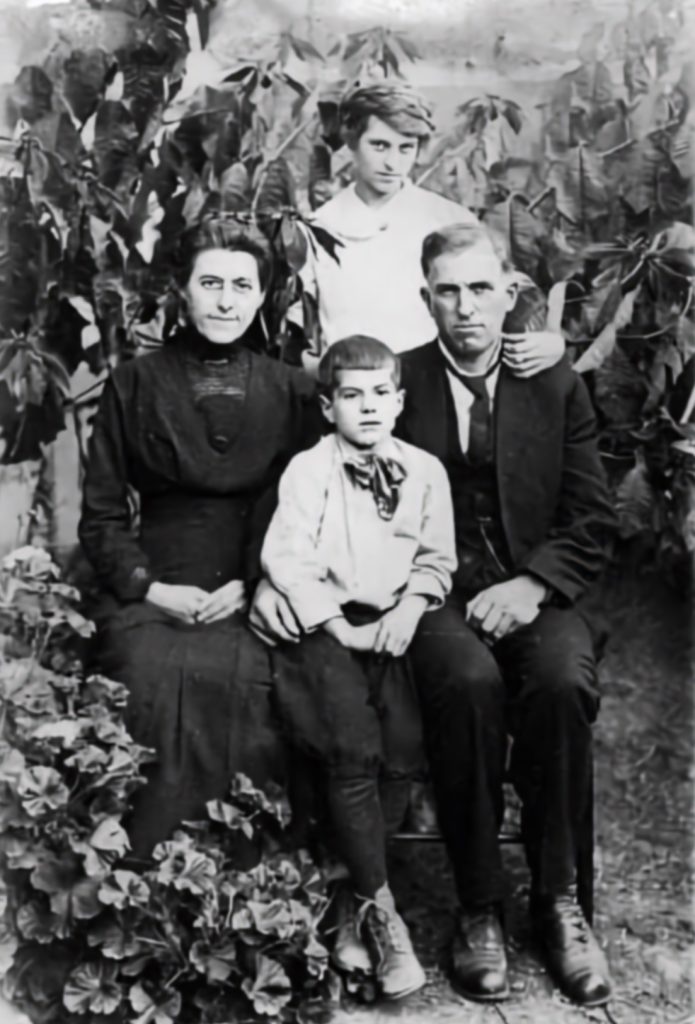
Rev. Leonidas Cicero Kirkes with his wife and sons

Figure J: Rev. Leonidas Cicero Kirkes (1866-1952), with his wife and sons. Rev. Kirkes was president of Trinity University in San Antonio prior to his arrival in Amarillo in 1905, when he became pastor at Fillmore Presbyterian, which became Central Presbyterian Church and then eventually First Presbyterian Church. Rev. Kirkes left Amarillo for Los Angeles in 1910 after the Central Presbyterian Church completed their new building at 10th and Taylor.

Rev. Kirkes forms the first library board to support and advise the library. Its members are appointed by the city commissioners. Newspaper accounts claim that this was the first library board established in Texas.
1910
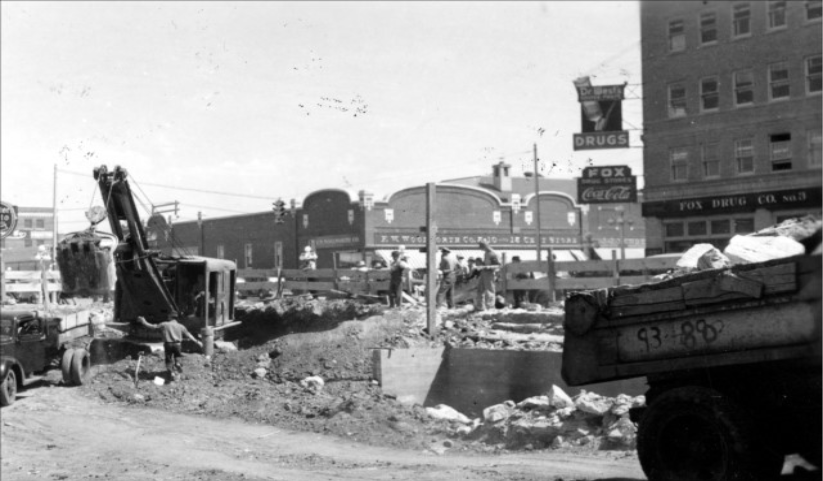
A vintage photo of the New Eberstadt building

A better view of the New Eberstadt building can be found in this picture, taken while the White and Kirk department store was under construction in 1938.

The library leaves the old city building and moves to rooms 1 and 2 of the New Eberstadt building at 603 S. Polk.
January 4, 1911
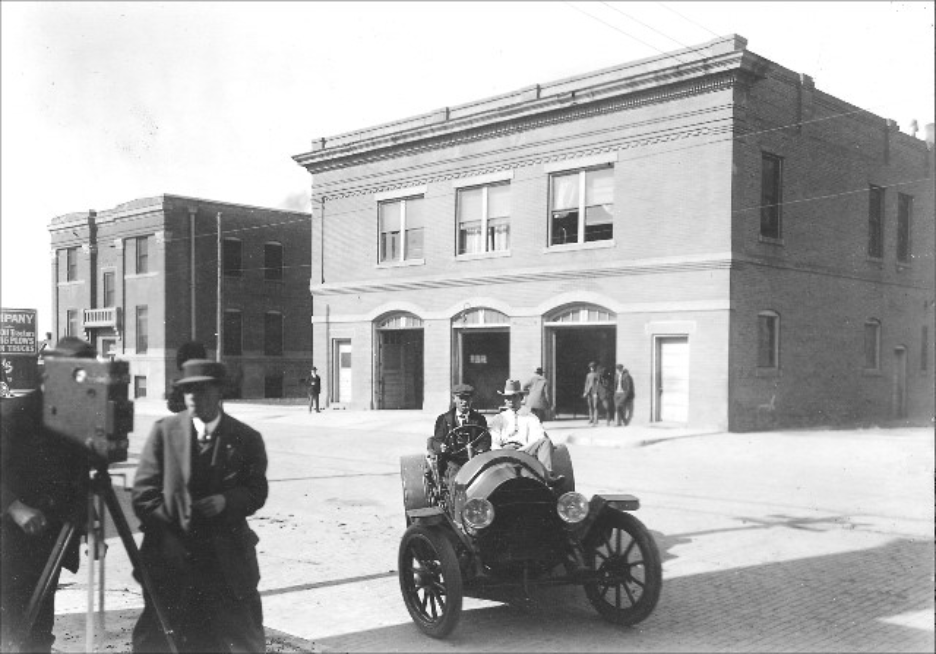
A vintage photo of a fire station and city hall in Downtown Amarillo

Constructed in 1907, the city's central fire station is shown to the right. City Hall, constructed in 1910, is shown to the left. Both buildings were funded with a bond election in 1905. The library moved to the 2nd floor of the fire station in 1911 and then to the 2nd floor of City Hall in 1912.

The library moves into rooms on the second floor of the Fire Station. The Fire Station and City Hall buildings were located on the northeast corner of 4th and Tyler, at the current site of the Downtown Athletic Club.
December 1912
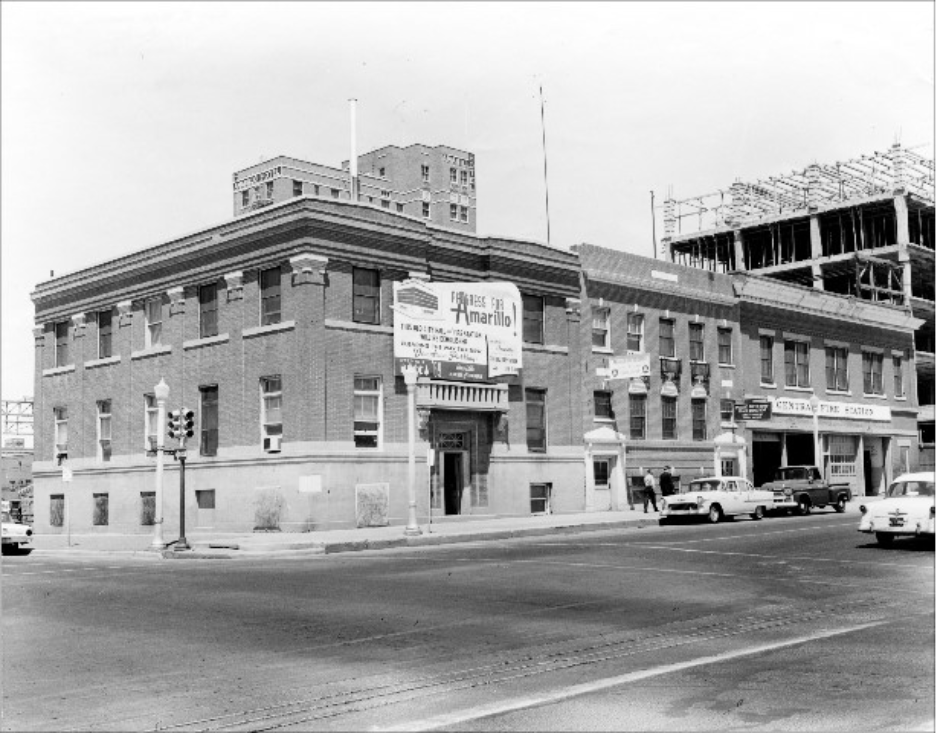
A vintage photo of the Amarillo's City Hall taken in 1960

Built in 1927, the City Hall addition filled the space between the existing building and the fire station. The library occupied the second floor of the 1910 City Hall building until 1921. The 1910 City Hall, its addition, and the 1907 Fire Station were demolished in 1961. The City’s offices moved to the Municipal Auditorium until construction of a new City Hall was completed in 1966. This photo was taken in 1960.

The library moves to rooms on the second floor of city hall.
1916

The city commission agrees to give $75 per month to help support the library but does not want to take it on as a part of city government due to the need to vote on a tax increase to pay for a building. The city’s Federation of Women’s Clubs provide the majority of funds and labor necessary for the library’s operations.

August 29, 1920

At the urging of the Federation of Women’s Clubs, Potter County residents petition the County Commissioners to take on the library as a county library, which would allow it to take advantage of new laws passed in Austin to promote the construction of county libraries.

July 1921

The Potter County Commissioner’s Court grants the petition. The second library advisory board is created and its members are appointed by the Potter County Commissioners Court.

August 1, 1921
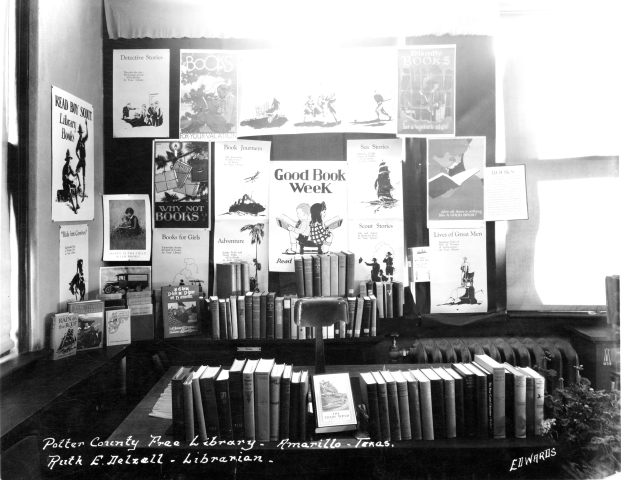
A vintage photo of the interior of the Potter County Free LIbrary

A photo of Potter County Free Library taken by then-librarian Ruth Delzell.

The Amarillo Public Library becomes the Potter County Free Library.
June 6, 1922
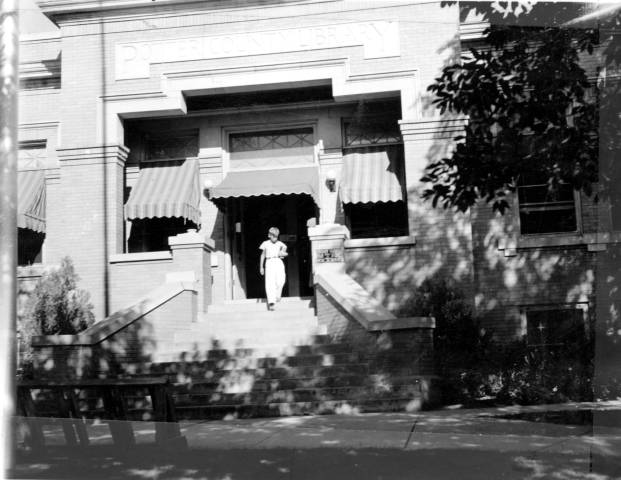
A vintage photo of a woman walking out of the previous Potter County Library

Potter County Library, c. 1922-1929

The Potter County Free Library building is completed and becomes the library’s first dedicated-use building. The building was also the first dedicated-use county library building ever constructed in Texas. Three other county library systems existed at that time, but none had their own building specifically designed to be a library.
October 19, 1923

Mrs. Lois White Henderson was hired as the county library’s Librarian.

1929

The Potter County Library opens a segregated branch. It is initially housed in the Methodist Church, but it is unclear which Methodist church.

January 31, 1932

The segregated branch was moved to the Fred Douglass School, where it served both the school and the Potter County’s Black and Hispanic populations.

1932-1933
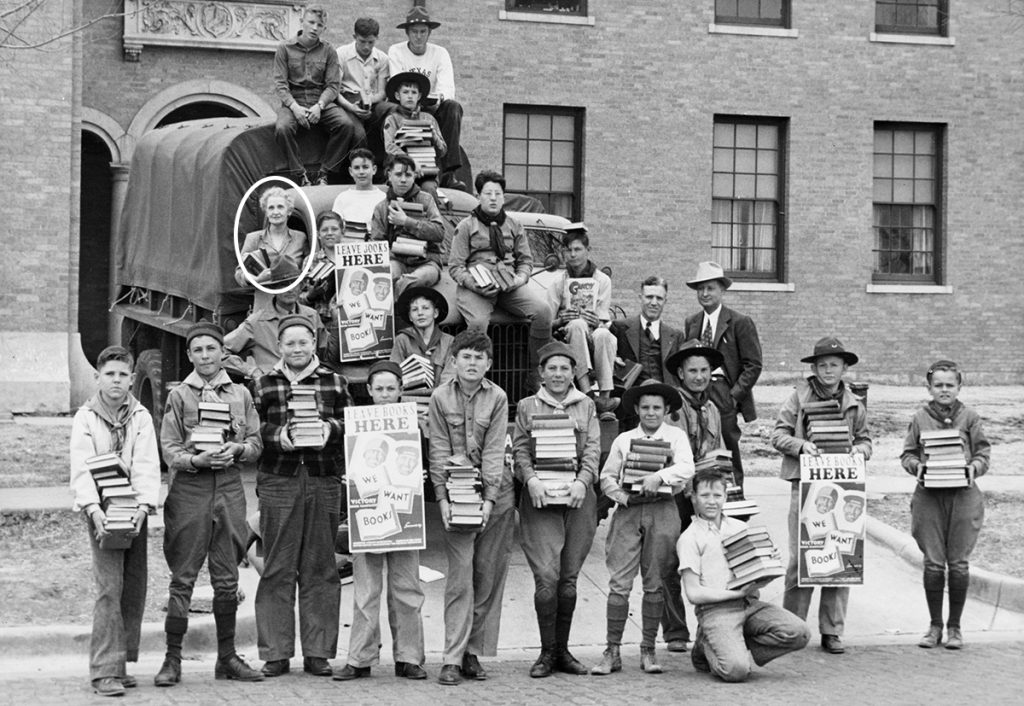
A vintage photo of Ruth Delzell and a group of boy scouts holding books and flyers reading "Leave Books Here"

Mrs. Ruth Evans Delzell, seen with a white circle around her, served as the library's director from 1927-1946. This photo was taken in 1943 with a group of Boy Scouts who were launching a book donation drive for the library. The building in the background is the Municipal Auditorium.

The Great Depression begins to be felt in earnest as book purchases are suspended, the City fails to pay its agreed supporting funds to Potter County, and staff salaries were cut. The library maintains 75 service hours per week in the face of soaring demand for services from newly unemployed residents looking for anything to help them find work and save money. Ms. Ruth Delzell, who served as director for 20 years, later remarked that these were the most challenging years during her tenure.
1937

As the Great Depression continues, Potter County suggests that the City take over the library as a cost-saving measure. State law required that the county send three additional dollars to Austin for every dollar it gave to the library. If the City took responsibility for the library, county taxpayers would be able to pay less tax while increasing the total funds given to the library.

Summer 1938

The first known instance of a Summer Reading Program at the library takes place.

September 7, 1939

After two years of the City declining to take action on the transfer proposal, Potter County suspends library service to residents of Amarillo, citing the City’s failure to pay any money to help support library operations even though most users were City residents. County residents outside the City were still permitted to use the library for free.

February 28, 1940

The City Commission votes to take responsibility for the library.

July 1940

The City agrees for the Amarillo Public Library to operate libraries in 11 county schools per its contract with Potter County. The collections were rotated every 6 weeks, and the custodians checked out books. The River Road and Pleasant Valley school libraries were open to the public year-round, effectively making them unofficial branch libraries.

August 1, 1940

Potter County officially transfers the library to the City of Amarillo, and the library’s name is once again the Amarillo Public Library.

September 15, 1940
A vintage photo of the Municipal Auditorium

The Municipal Auditorium as seen from Lincoln Street. The library occupied the East Wing of the building. The auditorium was later demolished to make way for the Civic Center.

The Amarillo Public Library moves to the East Wing of the Municipal Auditorium on the 500 block of Buchanan St. It occupied 3 floors.
1941

The Bush Collection was given to the Amarillo Public Library by Mrs. Ruth G. Bush, widow of William Henry Bush. Mr. Bush provided the majority of the library’s books when it was established in 1902.

1947

Amarillo Public Library hosts the inaugural meeting of the Panhandle Regional Library Association

October 15, 1947

The City’s first official branch opens inside the San Jacinto Youth Center on the northeast corner of 7th and S. Carolina, which is currently occupied by Heal the City.

April 19, 1949
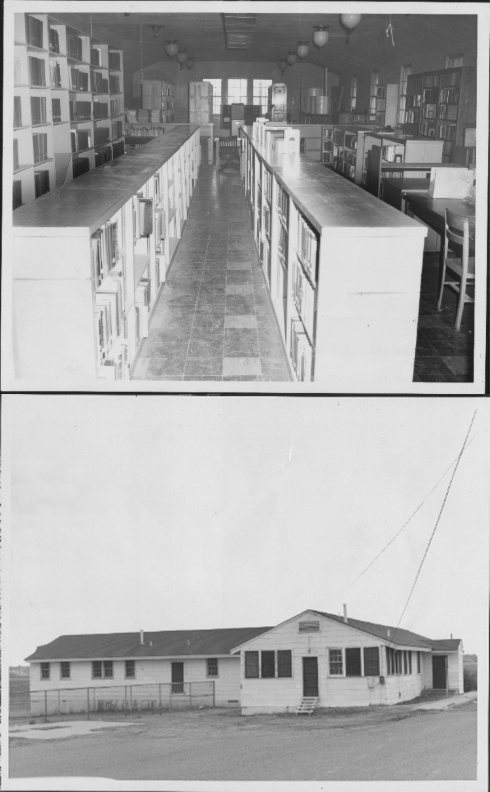
A collage of the George Washington Carver branch library featuring exterior and interior photos

The George Washington Carver branch shown as it was after it closed in 1957 and became the library storage facility. Judging by the construction seen in the Downtown area, these photos were taken around 1970. Martin Luther King, Jr. Park occupies the site today.

The George Washington Carver Branch opens in North Heights, becoming the library’s second official branch under the City’s control and providing segregated service. This barracks building was moved to the site from English Field, which was formerly the Amarillo Army Air Field. 
May 20, 1951

The Friends of the Library forms.

June 25, 1952
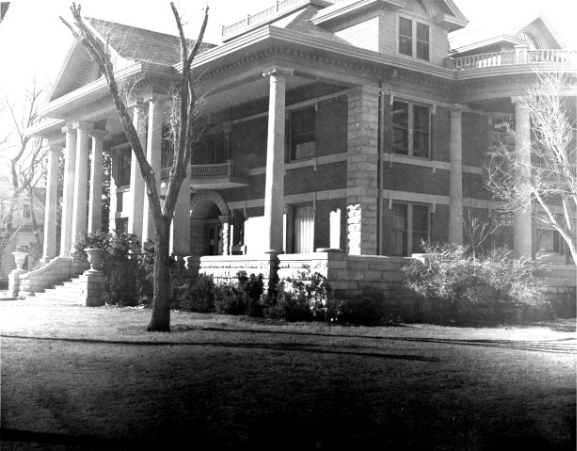
A vintage photo of the Mary E. Bivins home

The Mary E. Bivins home was located on the southwest corner of 10th and Polk.

The City accepts the Mary E. Bivins home, which she gave to the city in her will for use as a public library or other civic building.
August 1952

The Library Advisory Board is reconstituted, having disbanded when the library was transferred from Potter County to the City of Amarillo.

October 23, 1953

The Genealogical Advisory Committee forms.

July 8, 1955
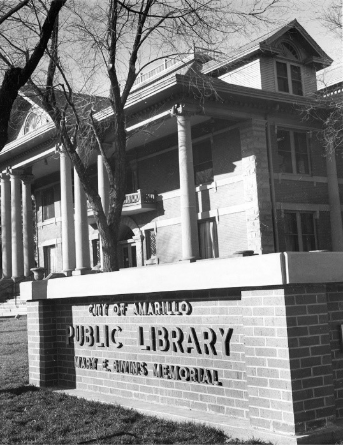
The Mary E Bivins Memorial library

The Mary E. Bivins Memorial Library occupied the home between 1955 and 1975. The Chamber of Commerce currently resides there.

The library opened to the public in the Mary E. Bivins home, and its name unofficially changed from the Amarillo Public Library to the Mary E. Bivins Memorial Library.
July 16, 1957

The library begins offering a bookmobile service after the American Association of University Women donated a bookmobile. The two branches in San Jacinto and North Heights were closed, leaving the library without any branches, official or unofficial, for the first time since 1929.

May 2, 1964

City residents approve a bond to build the first Southwest Branch Library.

November 1968
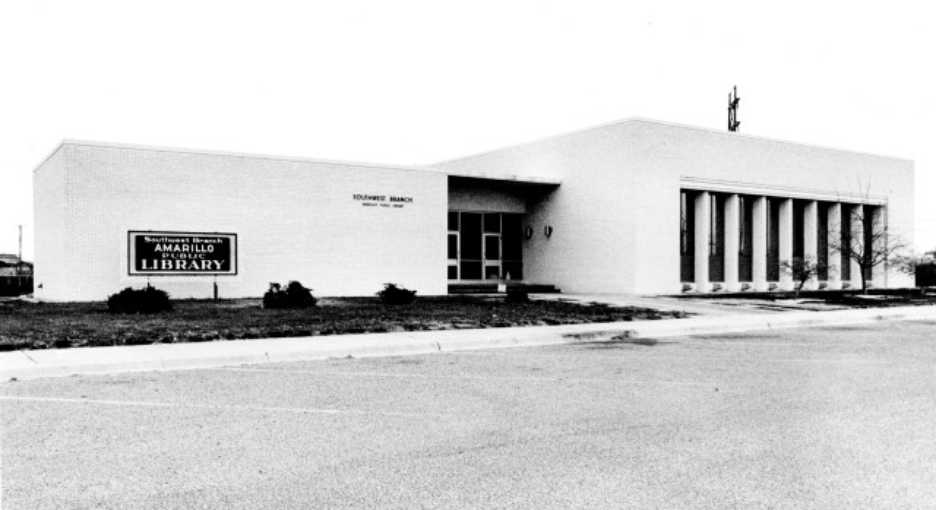
A vintage photo of the original Southwest Branch library

The first Southwest Branch Library was built in 1968 to accommodate Amarillo’s growth to the southwest. The branch moved down the street to its current location in John Stiff Memorial Park in 2002. The law offices of Dean Boyd currently occupy the old branch.

The first Southwest Branch Library opens to the public at 45th and Prairie.
November 28, 1972

Voters pass a bond authorizing construction of a new Downtown Library and the North and East Branch Libraries.

October 1974

Bookmobile services come to an end.

November 3, 1974
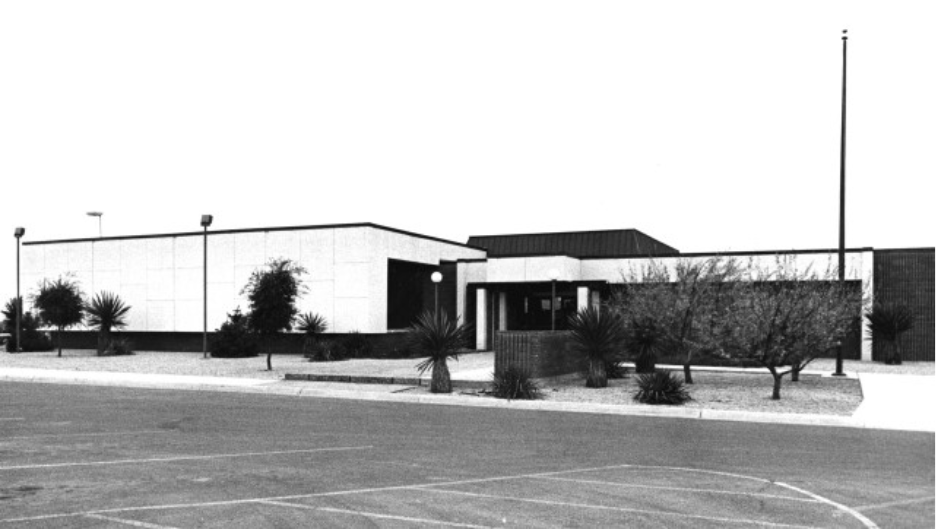
A vintage photo of the North Branch Library

The North Branch Library

The North Branch Library opens to the public.
Noember 3, 1974
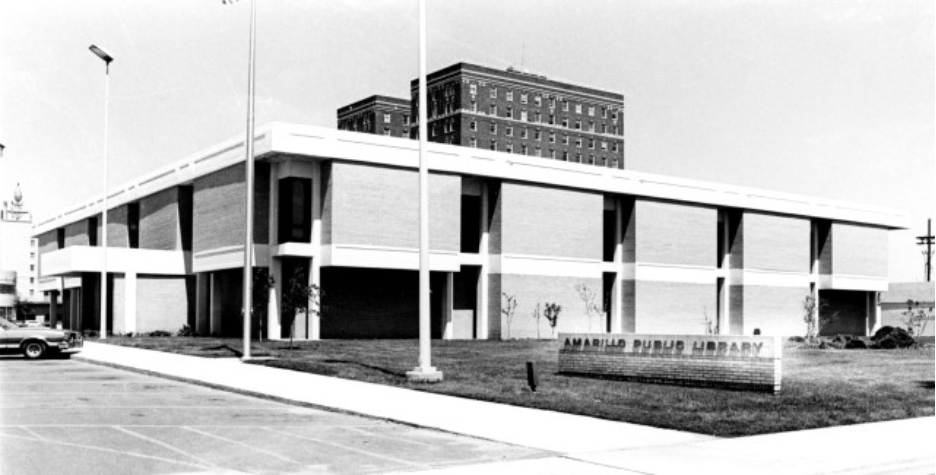
A vintage photo of the original East Branch library

The East Branch Library

The East Branch Library opens to the public.
August 1975

The Roman Catholic Diocese of Amarillo donates Bishop Laurence FitzSimon’s collection of rare materials covering the Southwest to the library.

1976

The McCarty Papers are given to the library by the family of John L. McCarty. The papers cover life in the Texas Panhandle from the early pioneer years through the Dust Bowl and the Great Depression.

November 28, 1976
A vintage photo of the Amarillo Public Library in Downtown Amarillo

The Downtown Library

The Downtown Library opens to the public.
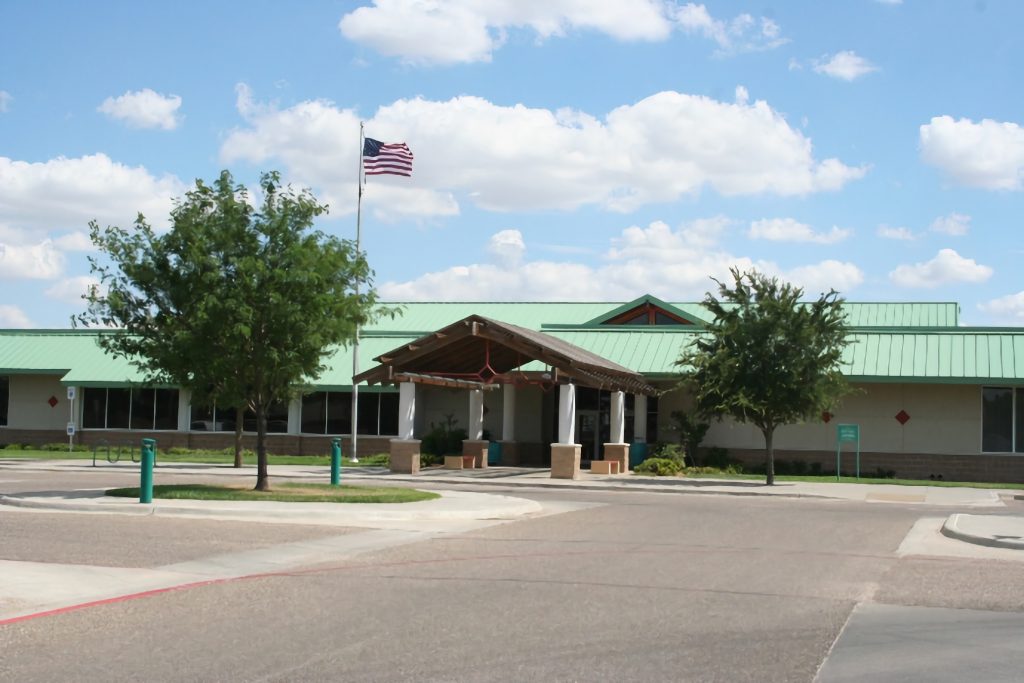
1980

The Amarillo Public Library, West Texas State University (now known as WTAMU), Amarillo College, and Texas Tech Health Science Center initiate an electronic union catalog.

1981

Funding for the electronic union catalog is provided by the federal government and the Don and Sybil Harrington Foundation, marking the birth of the Harrington Library Consortium, with APL, WTSU (now WTAMU), AC, and TTU-HSC being the charter members.

1981

The library’s first security system is installed as annual losses due to theft climbed to 2.5%.

1984

The Harrington Library Consortium’s electronic union catalog goes online.

October 12, 1999

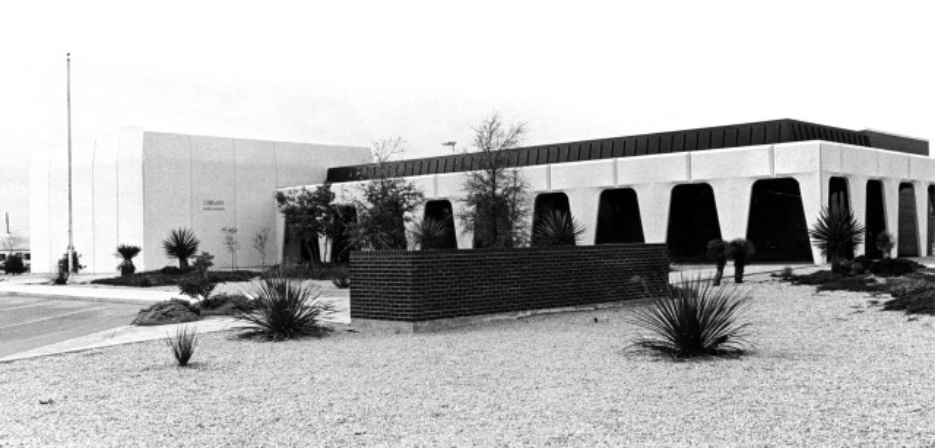
Amarillo residents approve $6.91 million in bonds to replace the old Southwest Branch Library and build the Northwest Branch Library.

2002

The new Southwest Branch Library is built.
2003
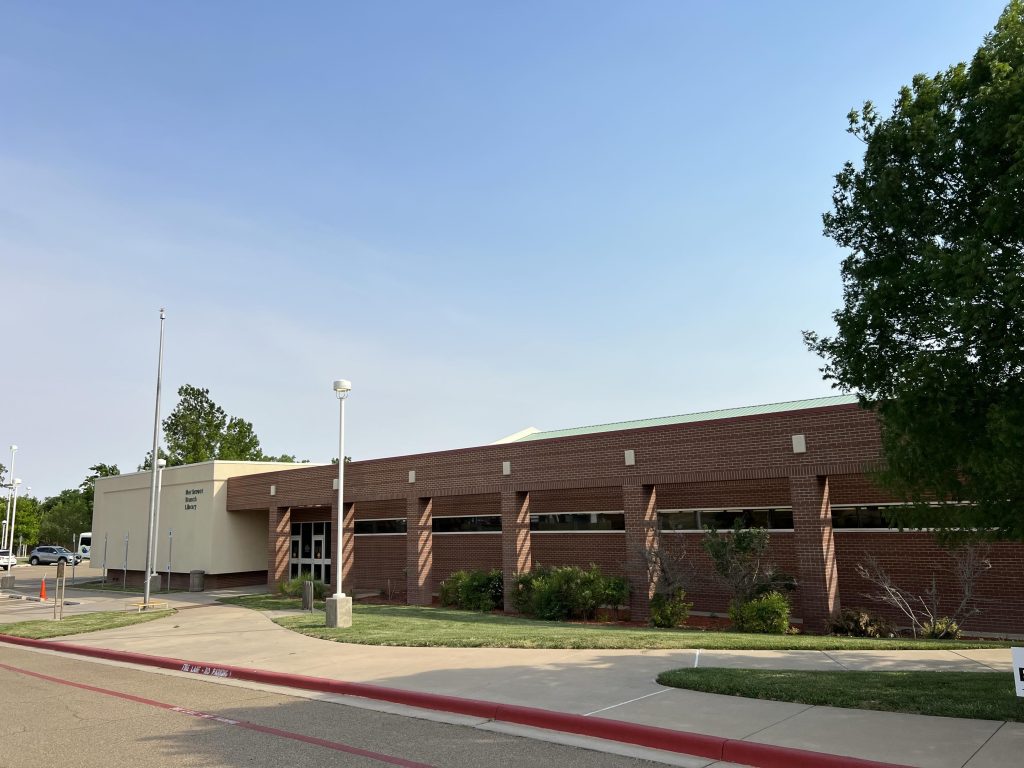
The outside of Amarillo Public Library's Northwest Branch

The Northwest Branch Library located off of 9th Avenue near the Amarillo Boulevard.

The Northwest Branch Library is built.
2006

The Amarillo Public Library begins offering downloadable e-books and audiobooks for patrons.

2008

The Harrington Wing is built onto the east side of the Downtown Library, providing two additional meeting spaces and a computer training lab.

2014

Video streaming services became available to patrons.

2018

The library starts the process to establish a designated MakerSpace area. Funding for the $75,000 renovation came from the Amarillo Area Foundation, the Friends of the Amarillo Public Library, the Texas State Library and Archives Commission, and the Institute of Museum and Library Services.

June 7, 2021
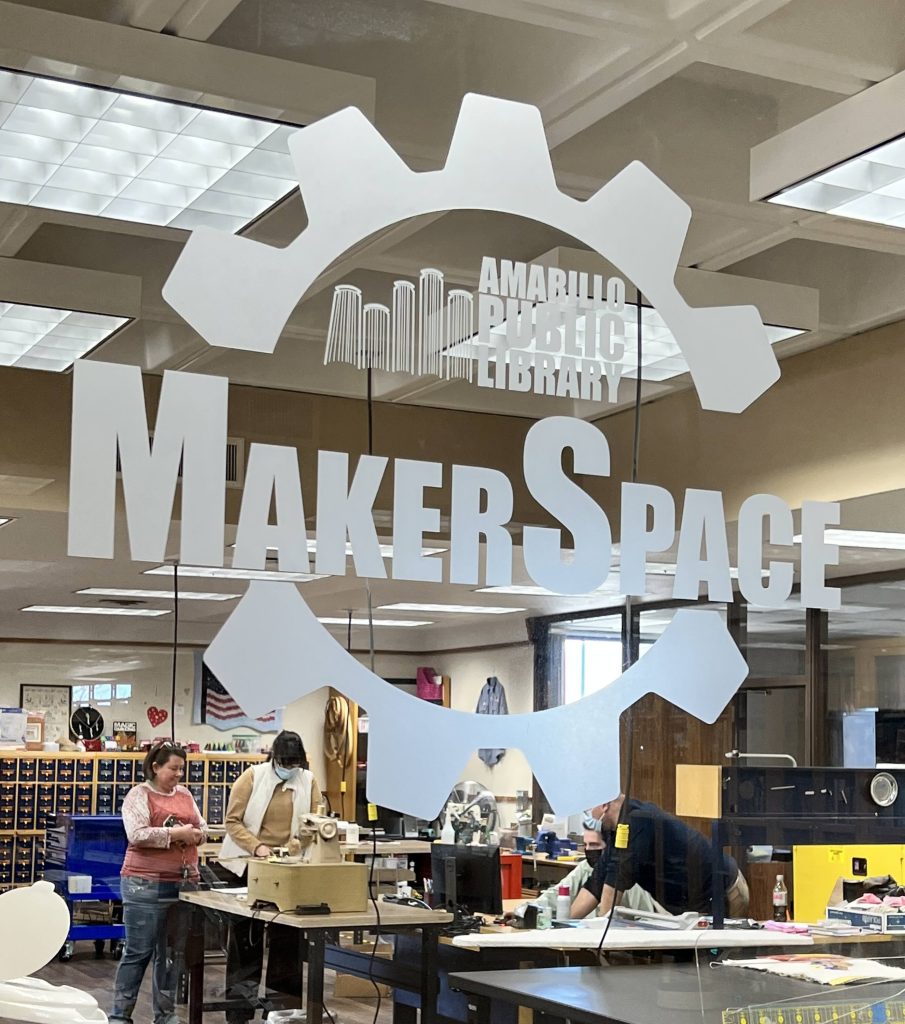
A look into the MakerSpace window with a few people working on various crafts

A look inside the MakerSpace with patrons working on a variety of crafts and hobbies.

The MakerSpace opens on the second floor of the Downtown Library. This space aims to be as inclusive as possible in what it offers, stocking everything from sewing machines and shop tools to classic arts and crafts supplies.

April 2026

The Library of Things becomes available to cardholders. This collection consists of objects to loan that differ from the traditional library offerings of books and media. Items include kitchen appliances, tools, electronics, toys and games, art and science equipment, musical instruments, and recreational equipment such as sports and outdoors gear. The goal is to provide access to objects that are occasionally useful but costly to purchase or cumbersome to store.

Select A Language to Translate This Page

About Translations on Amarillo.gov

The City of Amarillo offers translations of content on Amarillo.gov through the Google Translate web translator (translate.google.com). Because Google Translate is an external service, the City does not control the quality or accuracy of translated content. As a result, some translations may contain inaccuracies, and there may be issues with the appearance of translated pages, including errors in images.

If you encounter incorrect or substandard translations, you can help improve them by contributing better translations using Google Translate:

  1. Hover over any text containing an error, and a pop-up box will appear.
  2. Click “Contribute a better translation.”
  3. Double-click the area of the pop-up that says “Click a word for alternative translations, or double-click to edit directly.”
  4. Make your edits directly in the text box.
  5. Press “Contribute” to submit your suggested changes.

For more information on contributing to Google Translate, visit Google Translate’s help page.

Please note that the City of Amarillo does not control the process by which contributed translations are incorporated into Google Translate.

The City of Amarillo is dedicated to enhancing the accessibility and multilingual content available on our website.

City of Amarillo: Property Taxes Rebated Per Year by Agreement Type 

Overview 

The chart shows the dollar amounts of property taxes rebated per year over the last five fiscal years, broken down by agreement type. There were no Chapter 380 property tax rebates in the first two years listed. The total amount increased slightly each year, with a more significant increase in the most recent year. 

Values 

Numerical values presented on the image: 


Fiscal Year 2020/2021 

Fiscal Year 2021/2022 

Fiscal Year 2022/2023 

Fiscal Year 2023/2024 

Fiscal Year 2024/2025 

Chapter 311 

$533,080 

$547,426 

$574,947 

$591,249 

$821,350 

Chapter 380 

$0 

$0 

$37,387 

$39,172 

$61,013 

Presentation 

The bar chart shows the amount of property taxes rebated in the past five fiscal years, broken down by agreement type. The horizontal axis shows each of the past five fiscal years and the vertical axis shows the dollar amount rebated. For each fiscal year there is vertical column, comprised of two stacked columns, each of which representing the different agreement types. 

City of Amarillo: Number of Tax Abatements Granted Per Year 

Overview 

The chart shows the number of businesses that received a tax abatement from the City of Amarillo in the past five fiscal years. The 2020/21 and 2021/22 fiscal years each had four active abatements, 2022/23 had five, and 2023/24 and 2024/25 each had seven. 

Values 

Numerical values presented on the image: 


Fiscal Year 2020/2021 

Fiscal Year 2021/2022 

Fiscal Year 2022/2023 

Fiscal Year 2023/2024 

Fiscal Year 2024/2025 

Active Abatements Per Year 

4 

4 

5 

7 

7 

Presentation 

The bar chart shows the number of businesses that received a tax abatement from the City of Amarillo in the past five fiscal years. The horizontal axis shows each of the past five fiscal years and the vertical axis shows the number of active abatements each year. Each year has one column, with the height indicating number of active abatements in that year.

Amount of Taxes Abated Per Year 

Overview 

The chart shows the dollar amounts abated over the past five fiscal years from Chapter 312 tax abatement agreements. Each fiscal year shows a larger dollar amount abated, with minor growth over the first three years, a higher increase in the fourth year, and minor growth again in the fifth year. 

Values 

Numerical values presented on the image: 


Fiscal Year 2020/2021 

Fiscal Year 2021/2022 

Fiscal Year 2022/2023 

Fiscal Year 2023/2024 

Fiscal Year 2024/2025 

Taxes Abated by City of Amarillo 

$510,061 

$623,017 

$679,849 

$965,261 

$1,143,899 

Total Abated by All Entities Including City of Amarillo 

$1,569,512 

$1,926,332 

$2,103,099 

$2,884,936 

$2,959,496 

Presentation 

The bar chart represents the amount of taxes abated over the past five fiscal years. The horizontal axis shows each of the past five fiscal years and the vertical axis shows the dollar amount abated. The bar representing taxes abated by the City of Amarillo is sightly offset to the side of the bar representing the amount abated by all participating tax entities for each fiscal year. This shows that the amount abated by the City of Amarillo is a part of the total amount abated by all entities.

City of Amarillo: Taxes Rebated Per Year by Type 

Overview 

This chart shows the dollar amounts rebated by the City of Amarillo from economic development incentive agreements over the past five fiscal years. Each year is broken down by rebate type, including property tax rebates, hotel occupancy tax rebates, and sales tax rebates. Each fiscal year shows a slight increase in total dollars rebated, with a more drastic increase in the most recent fiscal year. 

Values 

Numerical values presented on the image: 


Fiscal Year 2020/2021 

Fiscal Year 2021/2022 

Fiscal Year 2022/2023 

Fiscal Year 2023/2024 

Fiscal Year 2024/2025 

Property Tax Rebates 

$533,080 

$547,426 

$612,334 

$630,421 

$882,363 

Hotel Occupancy Tax Rebates 

$686,747 

$753,112 

$794,828 

$871,423 

$808,348 

Sales Tax Rebates 

$0 

$21,046 

$55,528 

$45,881 

$368,716 


Presentation 

The bar chart represents the amount rebated by the City of Amarillo for each type of tax rebate over the past five fiscal years. The horizontal axis shows each of the past five fiscal years and the vertical axis shows the dollar amount rebated. The different rebate types are stacked vertically in each fiscal year, with the height representing the total dollar amount rebated.